




Sublingual delivery is real science + it is also the most oversold mechanism in the supplement category. The tissue under your tongue genuinely does absorb some compounds straight into circulation. It does not absorb all of them, + no mint delivers its entire dose that way. Here is how the mechanism actually works, which ingredients it suits, + what a fast-dissolving mint honestly gives you.
What Sublingual Absorption Actually Is
The floor of your mouth is lined with thin, permeable tissue sitting directly over a dense network of blood vessels. Compared to the lining of your gut it is a short trip: a few cell layers between a dissolved molecule + the bloodstream.
Swallow something instead + it takes a longer route. Down to the stomach, through gastric emptying on whatever schedule your last meal dictates, into the small intestine for absorption, then into the portal vein + through the liver before it reaches general circulation.
That liver step is called first-pass metabolism, + it is the real reason people care about this route. The liver chemically processes a portion of what arrives before the rest continues on. For some compounds that fraction is small. For others it is most of the dose. Absorbing across the oral mucosa skips that pass for whatever portion goes that way.
Why It Is Faster
Two reasons, + only one of them is exotic. The first is the shorter physical route: fewer barriers between dissolved compound and bloodstream means quicker arrival.
The second is that you skip gastric emptying, which is the most variable step in oral absorption. On an empty stomach a capsule may clear quickly. After a large meal it can sit for well over an hour, + your supplement is waiting in line behind lunch. Sublingual absorption does not queue.
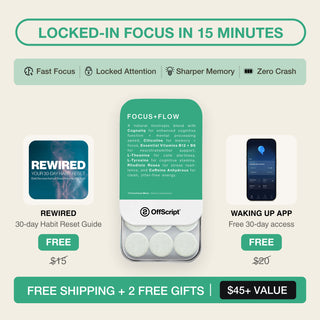
Practically, that is the difference between a dose that works on a predictable timeline + one that depends on what you ate. FOCUS+FLOW is built to work in about 15 minutes because it starts dissolving on contact rather than waiting for a stomach to empty.
Which Compounds Actually Cross
Here is the part most articles skip, because it complicates the pitch. The oral mucosa is selective. Molecules cross it well when they are small, reasonably fat-soluble + not ionized at the pH of saliva. Miss those criteria + the tissue is a poor door.
Caffeine crosses well. Small, lipophilic, well suited to the route, + there is published work on buccal and sublingual caffeine delivery showing faster onset than swallowed forms.
Amino acids like L-Theanine and L-Tyrosine are a mixed case. They are small enough, but they are charged at physiological pH, which slows passive diffusion across the membrane. Some crosses. A meaningful share is swallowed + absorbed conventionally.
Botanical extracts like Rhodiola are the weakest fit. The active constituents are larger, more complex molecules + are not good candidates for mucosal absorption. Realistically these are swallowed + absorbed through the gut, the same as they would be from a capsule.
What A Mint Really Delivers
A mixed route, + saying so plainly is the whole point of this page. Part of the dose absorbs in the mouth while the mint dissolves. The rest is swallowed with saliva + takes the ordinary path. The result is a faster front end, not a complete bypass of digestion.
So the accurate claim is modest: the fast-crossing ingredients arrive sooner, which is why the effect starts sooner. The rest still gets there. You have not lost anything relative to a capsule, + you have gained speed on the ingredients that most determine how a session starts.
Small + lipophilic. The best mucosal candidate in the formula.
Partial. Small but charged, so some crosses + some is swallowed.
Partial, for the same reason. Both routes contribute.
Largely swallowed. Larger molecules, absorbed through the gut.
Any brand telling you a mint delivers 100% sublingually is either not checking or hoping you will not. The mechanism is worth having. It is not magic, + it does not need to be.
When Speed Matters, + When It Does Not
Speed matters when the need is unplanned. A meeting that appeared on your calendar twenty minutes ago. A drive you did not intend to make. The gap between finishing one thing + starting something that requires your attention. In those windows, the difference between 15 minutes and an hour is the difference between a useful tool and a dose that arrives after the moment has passed.
Speed does not matter for a stable daily routine. If you take something at 7am every morning with breakfast, onset time is irrelevant, + a capsule serves you perfectly well. Paying a premium for fast delivery you never use is not a smart purchase.
It also does not matter at all for the slow-tier compounds. Adaptogens and membrane-support ingredients work over weeks of consistent use. Getting them into your bloodstream forty minutes sooner changes nothing about how they work, + a brand implying otherwise is stretching one mechanism across ingredients it does not apply to.
FIFTEEN MINUTES, NOT SIXTY
A fast-dissolving mint. No water, no waiting on digestion.
SHOP FOCUS+FLOWFor more on the format, read sublingual absorption + nootropic mints.
Key Takeaways
- Sublingual tissue is thin + well supplied with blood, so some compounds reach circulation quickly.
- The route skips first-pass liver metabolism + gastric emptying, the most variable step in oral absorption.
- It is selective. Small, fat-soluble, uncharged molecules cross well. Caffeine does. Botanical extracts largely do not.
- A mint delivers by a mixed route. Faster front end, not a complete bypass. Anyone claiming 100% is overselling.
- Speed matters for unplanned sessions. For a fixed daily routine, a capsule is fine.
References
- Kamimori GH, et al. The rate of absorption and relative bioavailability of caffeine administered in chewing gum versus capsules. International Journal of Pharmaceutics. 2002. PMID 11839447
- Fredholm BB, et al. Actions of caffeine in the brain with special reference to factors that contribute to its widespread use. Pharmacological Reviews. 1999. PMID 10049999
- Haskell CF, et al. The effects of L-theanine, caffeine and their combination on cognition and mood. Biological Psychology. 2008. PMID 18006208
- Jongkees BJ, et al. Effect of tyrosine supplementation on clinical and healthy populations under stress or cognitive demands. Journal of Psychiatric Research. 2015. PMID 26424423
- Darbinyan V, et al. Rhodiola rosea in stress induced fatigue: a double blind cross-over study on the mental performance of healthy physicians during night duty. Phytomedicine. 2000. PMID 11081987
FAQ
How does sublingual absorption work?
The tissue under your tongue is thin + sits over a dense network of blood vessels, so dissolved compounds can pass into circulation across just a few cell layers. That route skips gastric emptying and first-pass liver metabolism, where a portion of a swallowed dose gets processed before reaching general circulation. Fewer steps means a faster and more predictable arrival.
Are sublingual nootropics really faster?
For the ingredients that cross well, yes. Caffeine is small and fat-soluble, which suits the route, + published work on buccal delivery shows faster onset than swallowed forms. FOCUS+FLOW is built to work in about 15 minutes on that basis, against roughly 30 to 60 minutes for a capsule. Ingredients that cross poorly are simply swallowed and absorbed normally.
Do all ingredients absorb sublingually?
No, + this is the part the category tends to skip. The mucosa favors small, fat-soluble, uncharged molecules. Caffeine fits well. Amino acids like L-Theanine and L-Tyrosine are partial cases because they carry a charge at physiological pH. Botanical extracts such as Rhodiola have larger, more complex molecules + are mostly swallowed and absorbed through the gut.
Is FOCUS+FLOW fully sublingual?
No, and we would rather say so than imply otherwise. It is a fast-dissolving mint that delivers by a mixed route: part absorbed in the mouth while it dissolves, part swallowed with saliva and absorbed conventionally. That gives a faster front end on the ingredients that determine how quickly a session starts, without losing anything relative to a capsule.
Does sublingual delivery mean I need a smaller dose?
Not in a way you should count on. Skipping first-pass metabolism can mean more of a given compound reaches circulation, but the effect varies by ingredient + no mint delivers its full dose that way. The sensible approach is to judge a product on the amounts printed on the label rather than on an absorption claim that is difficult to verify.
