




The 2PM slump is not a personal failing. It is a predictable collision between two systems: adenosine that has been building in your brain since you woke up, + a post-lunch glucose curve heading for its trough. Most people answer it with a third coffee, which arrives 40 minutes late + costs them sleep that night.
Caffeine mints are small pressed mints carrying a measured caffeine dose, typically 40 to 100mg, absorbed partly through the mouth’s lining so alertness arrives in roughly 15 minutes instead of the 40-plus a swallowed coffee needs. The good ones pair the caffeine with L-Theanine, which is what separates clean alertness from the jitters.
A caffeine mint answers the same problem differently. It dissolves in your mouth, absorbs through the tissue there rather than routing through your stomach, + reaches you in minutes instead of most of an hour. This is a practical guide to using that format well: what makes a good one, how to time it, + where it genuinely beats coffee, gum + energy drinks.
What Actually Causes the Afternoon Slump
Two mechanisms, both boring + both fixable.
Adenosine. From the moment you wake, adenosine accumulates in the brain as a byproduct of energy use. It binds to receptors that dial down alertness, + the longer you have been awake the louder that signal gets. Caffeine works by occupying those receptors so adenosine cannot (Fredholm et al., 1999). It does not add energy. It mutes the fatigue signal.
The glucose trough. The other half arrives with lunch. Research tracking postprandial glucose in over 1,000 people found that the dip below baseline two to three hours after eating, not the peak, was the strongest predictor of returning fatigue + hunger. A fast-carb lunch digs a deeper trough, + that trough lands at roughly 2PM.
Which means the slump runs on a schedule. If you know when it arrives, you can meet it fifteen minutes early rather than chasing it for an hour.
Why the Mint Format Fits This Specific Problem
The tissue under your tongue + inside your cheeks is thin, densely supplied with blood vessels, + drains directly into circulation without passing through the liver first. That is why nitroglycerin goes under the tongue rather than down the hatch.
A swallowed capsule takes the long route: dissolve in the stomach, pass to the small intestine, absorb across the gut wall, then run the liver's first-pass gauntlet before anything reaches your brain. In controlled pharmacokinetic testing, caffeine delivered through the mouth reached peak plasma concentration substantially faster than the identical dose swallowed in a capsule (Kamimori et al., 2002).
One honest clarification, because this category oversells it: faster is not stronger. Total absorption over the full time course came out broadly comparable. You are buying onset speed, not extra dose. For a 2PM problem, onset speed is exactly the variable that matters.
What Separates a Real Caffeine Mint From Candy
Three tests. A product failing any one of them is a breath mint with a marketing claim.
A real dose. Roughly 100mg, about a cup of coffee. Trace amounts let a label say energy without delivering it, + force you to eat three or four pieces to feel anything, which changes both the real cost + the real caffeine load.
A counterweight. Caffeine alone produces the jittery, scattered version of alertness + a harder comedown. Pairing it with L-Theanine changes the character of the effect: controlled trials found the combination improved attention + reduced task-related tiredness more than caffeine alone (Haskell et al., 2008), + outperformed either compound on its own (Kahathuduwa et al., 2017).
Printed doses. A proprietary blend tells you the total weight of a group of ingredients but not how much of each. If you cannot check the milligrams against the research, you are trusting a marketing department.
Two red flags cancel a purchase outright: added sugar, which buys a spike + crash on top of the one you are already fighting, + any blend that hides its numbers.
How to Actually Use One
Time it to the block, not the clock. Take it fifteen to twenty minutes before the work that matters, rather than reflexively at 8AM alongside the coffee you already had. The whole advantage of a fast format is deciding when the effect lands.
Let it dissolve. Do not crunch it. Contact time with the tissue is the entire variable you are paying for; chewing it up + swallowing turns a fast mint into a slow capsule.
Count the day's total. One mint at 100mg is roughly one coffee. Stacked on three others it is simply more caffeine, not better caffeine.
Protect tonight's sleep. Caffeine taken even six hours before bed measurably disrupted sleep in controlled testing (Drake et al., 2013), + tomorrow's slump is built out of tonight's sleep. A 2PM dose is fine for most people. A 6PM dose borrows from the morning.
Caffeine Mints vs the Alternatives
| Format | Onset | Counterweight | Portability |
|---|---|---|---|
| Caffeine mint | ~15 min | L-Theanine, when formulated well | Pocket tin, no water |
| Coffee | 30 to 45 min | None | Needs brewing or a shop |
| Energy drink | 30 to 45 min | Rarely; often sugar instead | A can to carry + chill |
| Caffeine capsule | 45 to 90 min | Usually none | Portable, needs water |
| Caffeine gum | ~15 min | Usually none | Portable, requires chewing |
Coffee still wins on ritual + warmth, + if you love the ritual you should keep it. The mint wins when the moment is unplanned, the setting is a meeting, or the last thing your afternoon needs is another twelve ounces of liquid.
What FOCUS+FLOW Puts in the Tin
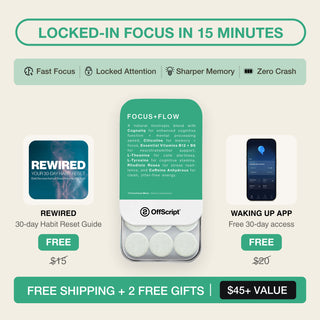
Ours is built to the standard above: 100mg of caffeine balanced by 150mg of L-Theanine, with a fuller stack behind it + every dose printed.
A real dose, roughly a cup of coffee.
The counterweight: calm, focused attention without the jitters.
Patented coffee-fruit extract, studied for BDNF support.
Dopamine precursor for drive under pressure.
Adaptogen for mental stamina under stress.
Raw material for acetylcholine, the attention neurotransmitter.
Supports neurotransmitter production.
Supports cellular energy.
Honest note, because we ask you to demand it of everyone: L-Tyrosine + Citicoline sit below their published clinical ranges here. They are supporting players. The caffeine + L-Theanine pairing carries the acute effect, + we print that rather than bury it in a blend.
FOCUS IN YOUR POCKET
Clean, crash-free focus in about fifteen minutes. 12 mints per tin, 2 tins per order.
SHOP FOCUS+FLOWKey Takeaways
- The 2PM slump is adenosine buildup meeting a post-lunch glucose trough. Both are predictable, so you can meet them early.
- Mints absorb through the mouth, reaching you in about fifteen minutes instead of 30 to 90 for swallowed forms.
- Faster is not stronger: total absorption is comparable. You are buying onset, which is the variable that matters here.
- A real caffeine mint needs a real dose (~100mg), a counterweight like L-Theanine, + printed doses. Sugar + proprietary blends are disqualifying.
- Time it fifteen minutes before the block, let it dissolve, count your daily total, + keep it out of the six hours before bed.
Explore The Series
- Caffeinated Mints vs Energy Drinks
- Caffeine Mints vs Coffee
- Chewable Caffeine: Portable Energy
- Caffeine Breath Mints
- Chewable Nootropics: For People Who Hate Swallowing Pills
- Nootropic Lozenges vs Sublingual Mints
- Best Energy Mints: A Faster Way to Stay Focused
- The 2PM Crash Isn't a Willpower Problem
- Clean Energy Without the Crash
References
- Fredholm BB, Bättig K, Holmén J, Nehlig A, Zvartau EE. Actions of caffeine in the brain. Pharmacol Rev. 1999;51(1):83-133. PubMed
- Kamimori GH, Karyekar CS, Otterstetter R, et al. The rate of absorption and relative bioavailability of caffeine administered in chewing gum versus capsules. Int J Pharm. 2002;234(1-2):159-167. PubMed
- Haskell CF, Kennedy DO, Milne AL, Wesnes KA, Scholey AB. The effects of L-theanine, caffeine and their combination on cognition and mood. Biol Psychol. 2008;77(2):113-122. PubMed
- Kahathuduwa CN, Dassanayake TL, Amarakoon AMT, Weerasinghe VS. Acute effects of theanine, caffeine and theanine-caffeine combination on attention. Nutr Neurosci. 2017;20(6):369-377. PubMed
- Drake C, Roehrs T, Shambroom J, Roth T. Caffeine effects on sleep taken 0, 3, or 6 hours before going to bed. J Clin Sleep Med. 2013;9(11):1195-1200. PubMed
FAQ
Do caffeine mints actually work?
Yes, + faster than swallowed forms. Part of the dose absorbs through the tissue in your mouth, which drains straight into circulation without passing through the liver first. Controlled testing found caffeine delivered this way reached peak plasma levels substantially sooner than the same dose in a capsule. The caveat: onset is faster, total absorption is comparable. Faster, not stronger.
How much caffeine is in a caffeine mint?
It varies widely, which is why printed doses matter. FOCUS+FLOW uses 100mg per mint, roughly a cup of coffee, paired with 150mg of L-Theanine. Some products run 40mg or less per piece, meaning you need two or three for a coffee-equivalent dose, which changes both the real cost + the real caffeine load.
Are caffeine mints better than coffee for the afternoon slump?
For that specific problem, usually yes. The slump arrives on a schedule, + a mint lets you meet it fifteen minutes early rather than waiting 30 to 45 minutes for a coffee to land. It also skips the acid on an empty stomach + the extra liquid. Coffee still wins on ritual, warmth + enjoyment.
Will a caffeine mint make me crash?
A well-formulated one should not. Crashes come from sugar or from caffeine with nothing to balance it. Look for zero sugar + an L-Theanine pairing, which controlled trials associate with steadier attention + less task-related tiredness than caffeine alone. Timing matters too: a late dose costs you sleep, + poor sleep builds tomorrow's slump.
When should I take a caffeine mint?
Fifteen to twenty minutes before the work that matters, most usefully just ahead of your usual afternoon dip. Let it dissolve rather than chewing it, count it toward your daily caffeine total, + keep it out of the six hours before bed.
These statements have not been evaluated by the Food and Drug Administration. This product is not intended to diagnose, treat, cure, or prevent any disease.
