



Energy management has quietly become one of the highest-leverage skills for anyone chasing real mental + physical performance. This guide is an honest comparison of clean, sustained energy against the familiar cycle of caffeine crashes — and what that difference actually does to your focus, your mood, + your day. You will learn how clean energy strategies diverge from ordinary caffeine use, and how to meet your energy needs in a way that lasts. Most people know the downside of the crash firsthand: the fatigue, the fog, the reach for a second cup that never lands like the first. Below we break down the benefits + drawbacks of each approach, the strategies that keep focus stable, + the health implications worth understanding before you reach for your next stimulant.
Guide to Achieving Sustained Natural Focus: Clean Energy vs. Caffeine Crashes
Understanding the distinction between clean energy + caffeine is the foundation of productivity that holds up. Clean energy refers to energy drawn from natural sources without the harsh side effects that tag along with raw stimulants. Caffeine delivers a fast boost, but it tends to be followed by a crash that erodes the very clarity you were chasing. Clean energy sources aim for the opposite: sustained focus + endurance with no jagged aftereffect. That contrast sets up everything that follows — the mechanisms, the outcomes, + the fix.
1. Understanding Clean Energy vs. Caffeine Crashes
Caffeine works as a central nervous system stimulant. It wards off fatigue + heightens alertness by blocking adenosine receptors in the brain — the receptors that would otherwise tell you it is time to wind down. That blockade fuels the sense of energy, but it is frequently followed by a crash marked by fatigue + a drop in cognitive function. Clean energy sources — natural supplements + nootropics — take a different route, promoting balanced energy by supporting neurotransmitter activity + metabolic efficiency. The result is not the peak-and-trough rollercoaster caffeine produces, but a steadier state that holds across the day.
2. Benefits and Drawbacks

Both approaches carry real benefits + real trade-offs. The table below lays them side by side:
| Aspect | Clean Energy | Caffeine |
|---|---|---|
| Benefits | Sustained focus, reduced fatigue | Quick energy boost, increased alertness |
| Drawbacks | May require time to take effect | Leads to energy crashes, dependency risk |
| Long-Term Use | Generally safe with low side effects | Potential for tolerance and withdrawal |
Caffeine buys you an immediate lift, but it often charges interest in the form of dependency + a comedown. Clean energy supplements may ask for a little patience before the benefits settle in, but they are generally the healthier bet for sustained mental performance. For people looking for that path, OffScript builds science-driven, transparent products designed to support cognition without the adverse aftereffects of conventional caffeinated drinks — energy that stays even, not energy you have to keep repaying.
3. Strategies for Maximizing Focus
Maximizing focus is mostly about building clean energy sources into the rhythm of your day. A few that carry real weight:
- Supplementation: Lean on natural nootropics like L-Theanine or Rhodiola Rosea, both known to support focus + blunt fatigue.
- Hydration: Keep hydration steady — even mild dehydration masquerades as tiredness + drags on cognition.
- Sleep Hygiene: Protect your sleep. A rested brain + body is the single biggest lever on focus + energy there is.
Stacked together, these habits sharpen cognitive performance + keep you clear of the traps that come with leaning on caffeine alone.
4. Potential Health Implications
Knowing the health implications of caffeine versus natural energy is central to making an informed call. Heavy caffeine intake can bring on anxiety, gastrointestinal discomfort, + disrupted sleep when it runs to excess. Clean energy sources tend to land more gently. Swapping some caffeine for adaptogens + nootropics can lower the risk of those adverse effects while still supporting cognitive health. As always, it is worth looping in a healthcare professional before any significant dietary change.
WHY DOES CAFFEINE CAUSE CRASHES AND HOW DOES IT HURT YOU?
Caffeine crashes are a rebound effect. Once the stimulant clears the body, adenosine receptor activity surges back, delivering a wave of fatigue + irritability. That cycle chips away at productivity + drags on mood + energy.
WHAT IS A CAFFEINE CRASH? UNDERSTANDING THE BIOLOGY
A caffeine crash is the sudden fatigue + loss of mental clarity that arrives once the stimulant's effects fade. Biologically, caffeine interrupts your normal energy pathways — an overload of neurotransmitter activity, followed by a steep drop as the body compensates for the stimulant's exit. That rebound, driven mainly by adenosine, is the reason for the post-caffeine slump.
HOW CAFFEINE DISRUPTS ENERGY PATHWAYS AND LEADS TO FATIGUE
The mechanism comes down to caffeine impersonating adenosine + blocking its natural job of signaling sleepiness. When the caffeine is finally metabolized, the sudden flood of unblocked adenosine overwhelms the system — and that overload is what tips you into exhaustion + disengagement.
WHAT ARE THE BEST NATURAL ENERGY BOOSTERS TO REPLACE CAFFEINE?
Finding effective natural alternatives is the key to managing energy sustainably. A few of the strongest clean energy sources:
TOP NOOTROPIC INGREDIENTS FOR CLEAN, SUSTAINED ENERGY
- L-Theanine: Frequently paired with caffeine to smooth out the jitters, it promotes relaxation without drowsiness while sharpening focus.
- Rhodiola Rosea: An adaptogen that helps the body adapt to stress + fatigue, holding energy in a more balanced state.
- L-Tyrosine: A dopamine precursor that supports the neurotransmitters behind drive, mood, + cognitive performance under load.
These natural boosters offer durable benefits without the downside that trails caffeine taken on its own.
HOW ADAPTOGENS LIKE RHODIOLA ROSEA REDUCE FATIGUE AND BOOST FOCUS
Rhodiola Rosea works by regulating the body's response to stress + fatigue, supporting mental performance when the task is demanding. Its adaptogenic properties build resilience to both physical + mental strain, which translates into clearer focus + more endurance across a long day.
HOW DOES OFFSCRIPT FOCUS+FLOW FIGHT CAFFEINE CRASHES WITH SCIENCE?
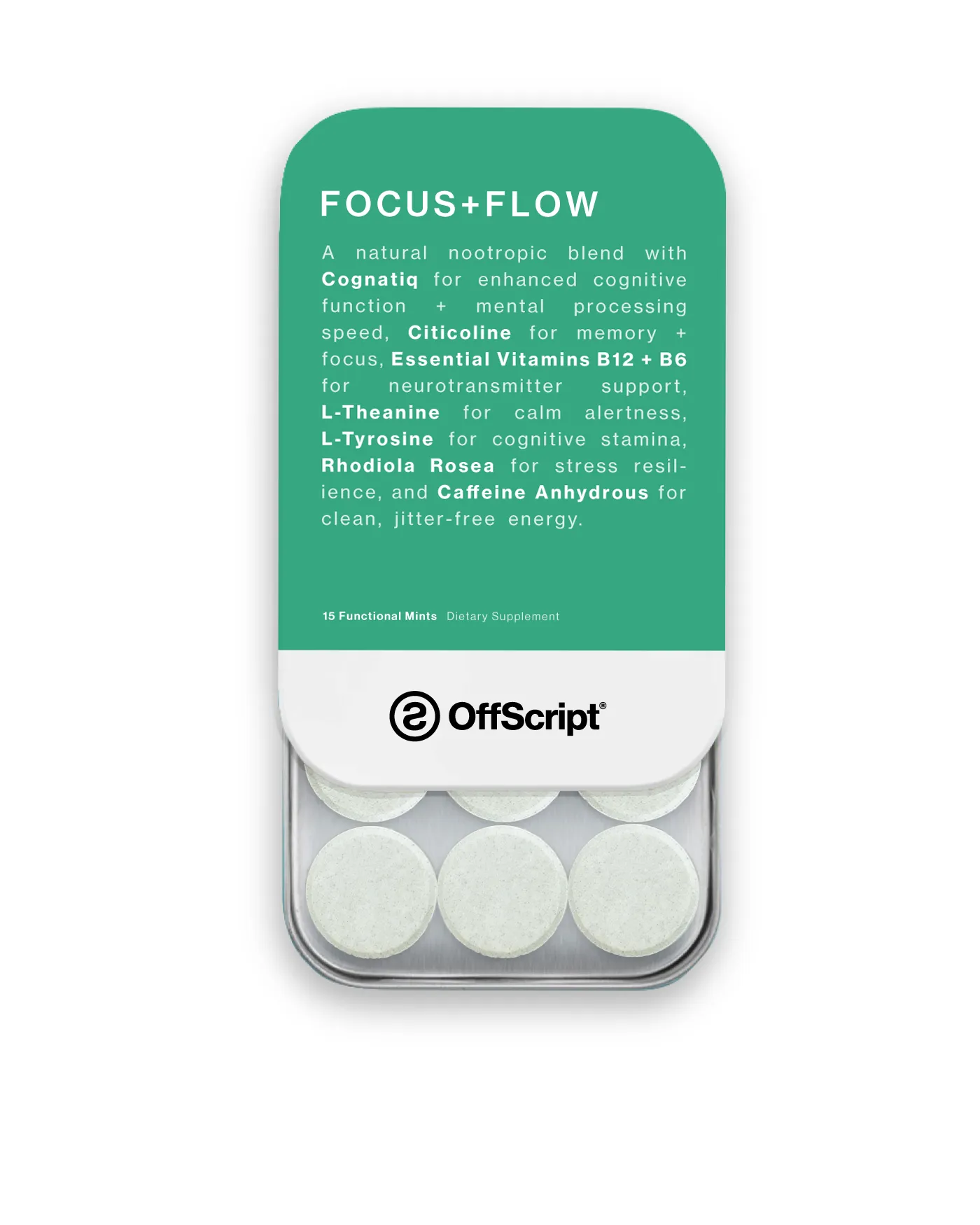
OffScript's Focus+Flow combines several nootropic compounds that work together to keep energy balanced instead of spiking + collapsing. It pairs a measured 100mg dose of caffeine with 150mg of L-theanine for that relaxed-alertness balance, then layers in the supporting cast your brain actually runs on:
Patented coffee-fruit extract, clinically studied to support BDNF — the protein behind neuron growth + resilience.
Calm, focused attention without the jitters — the ingredient that smooths caffeine's edges.
Dopamine precursor for drive + focus that holds up under pressure.
Adaptogen that supports mental stamina when the workload drags on.
Clean, measured energy — deliberately buffered by L-theanine.
Citicoline-sourced choline; the raw material for acetylcholine, the memory + learning neurotransmitter.
Supports the production of neurotransmitters.
Supports cellular energy — the metabolic groundwork beneath everything above.
L-THEANINE + RHODIOLA ROSEA: MECHANISMS THAT PROMOTE BALANCED ENERGY
Combining L-Theanine with Rhodiola Rosea builds a well-rounded cognitive support system, encouraging alpha brain wave activity + a state that is calm yet alert. This dual action does two things at once: it takes the edge off anxiety while helping sustain energy across the day rather than letting it spike + collapse. It is the same logic that runs through the whole formula — keep the alertness, engineer out the crash.
FOCUS ON COMMAND
Clean, crash-free focus built on the L-theanine + caffeine science above — 12 mints per tin.
SHOP FOCUS+FLOWCLINICAL PROOF BEHIND OFFSCRIPT'S NATURAL NOOTROPIC FORMULA
Research backs the logic of the formula. Studies point to meaningful gains in cognitive function, mood, + mental resilience when these natural ingredients are used in combination — the L-theanine + caffeine pairing in particular is one of the best-documented in cognitive science, consistently supporting attention + reaction time while taming caffeine's rough edges. The compounds in Focus+Flow were chosen for exactly that kind of evidence: mechanisms you can point to, not promises.
HOW TO MANAGE ENERGY AND AVOID CRASHES USING NATURAL SUPPLEMENTS
A few best practices go a long way toward keeping energy level + heading off the crash:
BEST PRACTICES FOR TIMING AND DOSING FOCUS+FLOW + CALM+COLLECTED
- Pre-Dose: Take Focus+Flow about 30 minutes before you sit down for cognitive work, so it is on board when you need it.
- Consistent Usage: Fold it into a daily routine — the supporting ingredients build their benefit over time.
- Hydration: Pair it with steady hydration for maximum effect + fewer false fatigue signals.
For a more complete approach, some people pair it with Calm+Collected, which helps take the edge off daily stressors without dulling your drive.
LIFESTYLE HABITS THAT SUPPORT SUSTAINED COGNITIVE ENERGY
- Regular physical activity, which drives blood flow + oxygen to the brain.
- Mindfulness or meditation, which supports focus + emotional regulation.
- A whole-foods diet, which lays the nutritional groundwork for neural health.
WHAT SCIENCE SAYS ABOUT SAFETY AND BENEFITS OF CAFFEINE ALTERNATIVES
The research on natural nootropics points to minimal side effects relative to synthetic stimulants, with the upside landing squarely on cognitive function — without the risk of addiction or withdrawal that so often shadows heavy caffeine use.
NATURAL SUPPLEMENTS VS SYNTHETIC STIMULANTS
Comparisons consistently suggest natural supplements can support cognitive function with fewer adverse effects than synthetic stimulants, which tend to build tolerance + dependency over time. Natural nootropics do their work through the body's existing pathways, which makes for safer integration into daily life. Rather than overriding your biology, they support it — the difference between whipping the system + actually working with it.
Key Takeaways
- The crash is not caffeine "wearing off" — it is the backlog of adenosine that piled up behind blocked receptors, arriving all at once when the caffeine clears.
- More coffee only deepens the debt + drives receptor changes, which is how tolerance + dependency build.
- Clean energy means caffeine that is buffered + directed, plus supporting compounds — not simply more stimulant.
- L-theanine, rhodiola, + L-tyrosine each support steady focus through the body's own pathways, with minimal side effects.
- Focus+Flow buffers 100mg caffeine with 150mg L-theanine, then adds tyrosine, rhodiola, CognatiQ, citicoline-sourced choline + B-vitamins to support the whole energy curve.
Explore The Series
- Natural Energy vs. the Caffeine Crash
- The 2pm Crash Isn't a Willpower Problem
- Does Caffeine Raise Cortisol?
FAQ
What actually causes a caffeine crash?
While caffeine blocks your adenosine receptors, your brain keeps producing adenosine in the background. When the caffeine finally clears, all of that accumulated adenosine binds at once, delivering the fatigue signal that was on hold. That sudden wall of tiredness is the crash — a rebound, not simply the caffeine "wearing off."
Is clean energy really better than caffeine?
It is less about better + more about how you use it. Caffeine is an effective tool, but taken alone + unbuffered it produces the spike-and-crash pattern. Clean energy pairs caffeine with supporting compounds — or replaces some of it with adaptogens + nootropics — so you keep the alertness while smoothing the descent + reducing dependency risk.
Which natural ingredients help sustain energy without a crash?
L-theanine promotes calm, focused attention + buffers caffeine's jitters. Rhodiola rosea is an adaptogen that supports stamina under stress. L-tyrosine is a dopamine precursor that supports drive + focus under pressure. Together they support steadier energy through the body's own pathways rather than forcing a spike.
How does L-theanine stop the caffeine jitters?
L-theanine is an amino acid found in green tea that promotes a state of relaxed alertness. Paired with caffeine at roughly a 2:1 ratio, it preserves the gains in focus + reaction time while reducing the jitteriness + the harsh comedown — which is why buffered caffeine feels cleaner than a raw dose.
Does Focus+Flow contain citicoline?
Yes. The label reads "Choline (as Citicoline), 18mg" — standard supplement-facts labeling that names the nutrient followed by its source form. The 18mg figure is the elemental choline delivered, + citicoline is the form it comes in.
References
- Wyatt P, et al. "Postprandial glycaemic dips predict appetite and energy intake in healthy individuals." Nature Metabolism, 2021. Nature Metabolism
- Dodd FL, et al. "A double-blind, placebo-controlled study evaluating the effects of caffeine and L-theanine both alone and in combination on cerebral blood flow, cognition and mood." Psychopharmacology, 2015. PMC
- "High-dose L-theanine–caffeine combination improves neurobehavioural and neurophysiological measures of selective attention in acutely sleep-deprived young adults." British Journal of Nutrition, 2024. PMC
- Huskisson E, et al. "The Role of Vitamins and Minerals in Energy Metabolism and Well-Being." Journal of International Medical Research, 2007. Journal
- "A functional evaluation of anti-fatigue and exercise performance improvement following vitamin B complex supplementation in healthy humans." International Journal of Medical Sciences, 2023. PMC
- Reyes-Izquierdo T, et al. "Modulatory effect of coffee fruit extract on plasma levels of brain-derived neurotrophic factor in healthy subjects." British Journal of Nutrition, 2013. PubMed