




"Cortisol face" arrived as a before-and-after: a puffy morning photo, a sharper afternoon one, + a caption blaming stress hormones. The term borrows real medical language, attaches it to something almost everyone experiences, then sells a fix. We sell calm supplements, so we have an obvious incentive to nod along with this one. We are not going to. Most of the time, a puffy face is not a cortisol problem, + the things that genuinely reduce it are mostly free. Here is the honest version.
Where The Term Comes From
There is a genuine clinical sign underneath the trend. In Cushing's syndrome, a condition of prolonged, pathologically elevated cortisol, fat redistributes toward the face + trunk, producing a rounded appearance doctors have described for decades. It is a real, documented feature of a real disease.
The problem is the leap. Cushing's is rare, it is diagnosed with proper testing, + it does not show up alone. It arrives with a cluster: noticeable muscle weakness, wide purple stretch marks, easy bruising, new high blood pressure, sometimes unexplained fractures. A face that looks puffy on Tuesday + fine on Thursday is not that.
What Is Actually Causing It
Facial puffiness is nearly always fluid, + fluid responds to a short list of ordinary things.
Sleep, both amount + position. Lying flat for hours lets fluid pool in the face. It drains once you are upright + moving, which is exactly why the effect fades by mid-morning. Short sleep makes it worse independently.
Salt the night before. A high-sodium dinner pulls water into tissue. This is the most common single cause + the fastest to test: watch your face after a restaurant meal versus a home-cooked one.
Alcohol. Both dehydrating + inflammatory, and it wrecks sleep quality on top. Alcohol is doing more work in most before-and-after photos than cortisol is.
Allergies + congestion. Sinus inflammation produces exactly the under-eye, mid-face swelling people photograph.
Hormonal cycles. Ordinary fluid shifts across a menstrual cycle produce visible facial changes that have nothing to do with stress.
Crying, heat, a long flight, a hard workout. All of them, all normal.
Notice that stress is not absent from this list so much as indirect. Stress ruins sleep, drives late drinking + pushes people toward salty convenience food. Those routes are real. They are just not "cortisol is inflating your face."
Where Cortisol Genuinely Fits
Being fair to the underlying biology: cortisol does influence fluid balance + where the body stores fat, which is why the association exists at all. Under sustained pressure the daily cortisol curve flattens, meaning a weaker morning rise + an evening that stays switched on. A systematic review of human trials on the hypothalamic-pituitary-adrenal axis maps where that regulation genuinely responds to intervention (Lopresti, 2022).
But the magnitude matters. The facial change documented in the research is the product of months of pathological cortisol levels, not of a stressful quarter at work. Ordinary life stress does not produce a clinically distinct face. It produces bad sleep, + bad sleep produces a puffy one.
Which means the honest advice points at the same place either way.
What Actually Reduces It
In rough order of how much difference each makes:
- Sleep, protected + regular. The single biggest lever, and it addresses both the fluid and the stress route at once.
- Cut the evening salt, not all salt. Dinner is the meal that shows on your face the next morning.
- Drop or delay the alcohol. Effects are visible within a day, which makes this easy to verify on yourself.
- Get upright + move early. A walk in morning light drains fluid + anchors your daily rhythm at the same time.
- Treat congestion properly if allergies are in play, rather than assuming hormones.
- Drink water. Counterintuitively, dehydration encourages retention.
What will not do much: facial ice rolling beyond a brief cosmetic effect, lymphatic massage marketed as detox, or any supplement sold specifically to "fix cortisol face."
The Part Where We Do Not Sell You Something
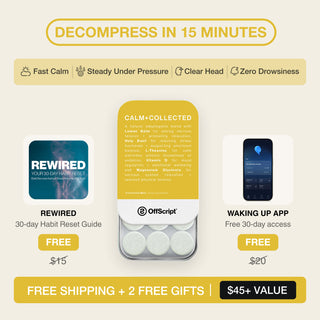
CALM+COLLECTED is built to support the stress response. It is not a treatment for facial puffiness + we are not going to imply otherwise. There is no controlled research showing a calm supplement changes how your face looks, + anyone claiming there is has invented it.
Where a formula like ours is honestly relevant is upstream: if a genuinely wired stress response is the thing wrecking your sleep, then supporting it is worth doing, + better sleep is the lever that actually shows up in the mirror. L-Theanine has the best acute evidence here, reducing the response to a stressor from a single dose in a triple-blind crossover trial (Evans et al., 2021). Holy basil has randomised placebo-controlled evidence on stress outcomes over weeks (Lopresti et al., 2022). Magnesium sits underneath as a cofactor, with the key systematic review calling the anxiety evidence suggestive but limited by study quality (Boyle et al., 2017).
That is an indirect, modest, two-steps-removed claim. It is also the true one.
Promotes calm, focused attention without drowsiness.
A traditional herb long used to promote a settled mood.
The adaptogen layer, judged over weeks rather than afternoons.
A gentle, well-absorbed form, easier on the stomach than oxide.
Commonly low in people who work indoors.
When To Take It To A Doctor
CALM UNDER PRESSURE
For the stress response underneath the bad sleep. Caffeine-free, every dose printed.
SHOP CALM+COLLECTEDKey Takeaways
- "Cortisol face" borrows a genuine sign of Cushing's syndrome, which is rare + never shows up as a puffy face alone.
- Everyday facial puffiness is fluid, driven mostly by sleep, position, evening salt, alcohol, allergies + hormonal cycles.
- Puffiness that fades by the afternoon is fluid. Fullness that builds over months + does not fluctuate is worth a doctor.
- Stress contributes indirectly, by wrecking sleep + pushing you toward late drinking + salty food, not by inflating your face directly.
- No supplement is shown to change how your face looks. Anything sold specifically for "cortisol face" is inventing the claim.
Explore The Series
- Signs of High Cortisol: What Is Real + What Is Not
- Cortisol Detox: What It Means + What Actually Works
- How To Lower Cortisol Naturally: The Complete Guide
- Cortisol Supplements: What Actually Works + What Is Marketing
References
- Lopresti AL. Modulation of the hypothalamic-pituitary-adrenal (HPA) axis by plants and phytonutrients: a systematic review of human trials. Nutr Neurosci. 2022;25(8):1704-1730. PubMed
- Evans M, et al. A Randomized, Triple-Blind, Placebo-Controlled, Crossover Study to Investigate the Efficacy of a Single Dose of AlphaWave L-Theanine on Stress in a Healthy Adult Population. Neurol Ther. 2021;10(2):1061-1078. PubMed
- Lopresti AL, Smith SJ, Metse AP, Drummond PD. A randomized, double-blind, placebo-controlled trial investigating the effects of an Ocimum tenuiflorum (holy basil) extract on stress. Front Nutr. 2022;9:965130. PubMed
- Boyle NB, Lawton C, Dye L. The effects of magnesium supplementation on subjective anxiety and stress: a systematic review. Nutrients. 2017;9(5):429. PubMed
FAQ
Is cortisol face a real thing?
Partly. Facial rounding is a documented sign of Cushing's syndrome, a rare condition involving prolonged, pathologically high cortisol. What circulates online under the name is usually ordinary facial puffiness, which is fluid rather than fat redistribution and comes from sleep, salt, alcohol, allergies or hormonal cycles. The medical term is real; its everyday application usually is not.
How do I get rid of a puffy face in the morning?
Get upright and move, ideally outside, since fluid drains once you are vertical. Drink water, because dehydration encourages retention. Then look at the night before: a salty dinner and alcohol are the two most reliable causes. Consistent sleep does more than any topical treatment, and most morning puffiness resolves on its own within a few hours.
Does stress cause facial puffiness?
Indirectly, and less than the trend suggests. Stress disrupts sleep, encourages late drinking and pushes people toward salty convenience food, all of which show up on your face. The direct hormonal route, cortisol redistributing facial fat, requires months of pathological levels rather than a demanding stretch at work.
Will a cortisol supplement fix my face?
No, and any product making that claim has invented it. There is no controlled research showing a calm or cortisol supplement changes facial appearance. If a genuinely overactive stress response is ruining your sleep, supporting it may help indirectly through better sleep, but that is two steps removed and worth being honest about.
When should facial swelling be checked by a doctor?
When it develops gradually over months and does not fluctuate day to day, particularly alongside muscle weakness, new wide purple stretch marks, easy bruising, weight gain across the trunk, or new high blood pressure. Persistent swelling can also indicate thyroid or kidney problems, or a medication side effect, and steroid medications produce this appearance directly.
These statements have not been evaluated by the Food and Drug Administration. This product is not intended to diagnose, treat, cure, or prevent any disease. This article is educational and is not medical advice.