


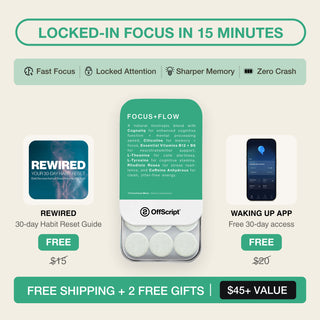


We should be upfront about something before anything else: our focus product contains caffeine. FOCUS+FLOW has 100mg of it, about a cup of coffee. So if you are here because you are trying to get away from stimulants, that is not the answer + we are not going to pretend it is.
What follows is the honest version instead. Most people searching this have a cause rather than a stimulant deficiency, + the useful work is finding which one.
First, Rule Out The Medical Causes
This is the part that gets skipped in favour of adaptogens, + it should not be.
Persistent fatigue that does not respond to rest has a short list of common, testable, treatable causes: iron deficiency or anaemia, low B12, thyroid dysfunction, vitamin D deficiency, sleep apnoea, depression, + for some people blood sugar dysregulation. Every one of those produces exactly what people describe as "low energy," + none of them is fixed by a supplement bought on a guess.
Then Fix The Two Big Behavioural Inputs
Sleep, and specifically sleep timing
Obvious, + still the largest lever. Worth adding the less obvious part: consistency of timing often matters more than total hours. A regular wake time anchors the whole daily rhythm, + the single most effective intervention is getting outdoor light within an hour of waking. It is free, it takes ten minutes, + it does more for afternoon alertness than most things you can buy.
The caffeine connection matters here too. If you are drinking coffee late to fight afternoon fatigue that came from poor sleep caused by drinking coffee late, you are in a loop. Moving the last dose earlier usually beats cutting the total.
Eating on a schedule
A lot of 3PM collapse is a blood sugar floor after a big, fast-releasing lunch or no lunch at all. Protein + fibre at midday, eaten at a consistent time, flattens the curve. Unglamorous, reliable.
What Actually Works Acutely, Without A Stimulant
- Movement. Ten minutes of walking reliably beats most things in this list for immediate alertness, + the effect is not subtle.
- Daylight. Going outside, even on a grey day, delivers far more light than any indoor setting. Alertness responds to it.
- Cold water on the face or hands. Crude, temporary, genuinely works.
- Hydration. Mild dehydration produces fatigue + poor concentration, + it is common in people who drink mostly coffee.
- A short nap, under 25 minutes. Longer + you wake mid deep sleep feeling worse than before.
Where Supplements Honestly Fit
Underneath the above, not instead of it.
Rhodiola rosea has the most relevant evidence here, because its studied effect is on mental fatigue under prolonged demand rather than on alertness in the moment (Darbinyan et al., 2000). That is the right shape for this problem. It is not a stimulant + will not feel like one.
Correcting a deficiency is the other honest supplement answer. Vitamin D if you are low + work indoors. B12 if you are low, particularly on a plant-based diet. Iron only after a ferritin test. The theme is that these work because you were short, not because more is better.
Magnesium sits underneath as a cofactor, + the evidence on stress + anxiety outcomes is real but modest, described in the key review as suggestive while limited by study quality (Boyle et al., 2017).
B vitamins as an energy source is the most common misunderstanding in this category. They are genuine cofactors in converting food into usable energy, which is why they appear on every energy product. They are not stimulants + they do nothing extra if your levels are already normal.
The Case Nobody Names: It Is Stress, Not Tiredness
A large share of people who describe themselves as low energy are not under-stimulated. They are running a stress response that has been elevated for months, which is exhausting in a way more caffeine actively worsens.
The tell is the pattern: tired in the morning despite enough hours, a clear second wind late at night, slow to settle after anything stressful, + tension sitting in the jaw or shoulders when nothing is happening. If that reads as familiar, adding stimulants is pushing on the wrong lever, + this is the one place a product of ours is genuinely relevant.
Promotes calm, focused attention without drowsiness. Works inside the hour.
A traditional herb long used to promote a settled mood.
The adaptogen layer, studied over weeks rather than afternoons.
A gentle, well-absorbed form, easier on the stomach than oxide.
Commonly low in people who work indoors.
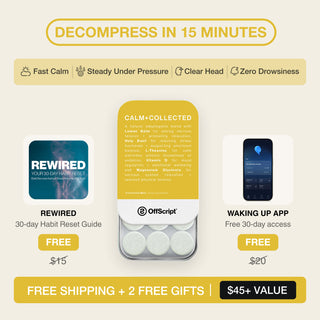
CALM+COLLECTED is caffeine-free. It is not an energy product + we are not selling it as one. It is for the case above, where the exhaustion is coming from a stress response rather than from being under-caffeinated.
Key Takeaways
- Rule out the testable causes first: iron, B12, thyroid, vitamin D, sleep apnoea + depression.
- Never supplement iron without a ferritin test.
- Consistent wake time + outdoor light within an hour of waking beat most purchasable interventions.
- Movement, daylight, hydration + a sub-25-minute nap are the acute non-stimulant options that genuinely work.
- Rhodiola targets mental fatigue under prolonged demand, which is the right shape for this problem.
- B vitamins are cofactors, not stimulants, + add nothing if your levels are normal.
- If the pattern is tired-in-the-morning + wired-at-night, the problem is the stress response, not caffeine supply.
Explore The Series
- The Best Caffeine Alternatives for Focus + Alertness
- Rhodiola Rosea for Mental Fatigue: What the Science Says
- Supplements For Burnout
- Cortisol + Sleep: The Curve That Decides Your Night
- The 2PM Crash Isn't A Willpower Problem
- Brain Fog: Causes + Natural Remedies
References
- Darbinyan V, et al. Rhodiola rosea in stress induced fatigue. Phytomedicine. 2000. PubMed
- Boyle NB, Lawton C, Dye L. The effects of magnesium supplementation on subjective anxiety and stress: a systematic review. Nutrients. 2017. PubMed
- Lopresti AL. Modulation of the hypothalamic-pituitary-adrenal (HPA) axis by plants and phytonutrients: a systematic review of human trials. Nutr Neurosci. 2022. PubMed
- Lovallo WR, et al. Caffeine stimulation of cortisol secretion across the waking hours in relation to caffeine intake levels. Psychosomatic Medicine. 2005. PMC
FAQ
How can I get energy without caffeine?
Start by ruling out testable causes of fatigue: iron deficiency, low B12, thyroid dysfunction, vitamin D deficiency, sleep apnoea and depression all produce what people call low energy. Then fix sleep timing and eat on a schedule. For an immediate lift without a stimulant, ten minutes of walking, outdoor daylight, hydration and a nap under 25 minutes are the options that reliably work.
What supplement gives energy without caffeine?
Rhodiola rosea has the most relevant evidence, because its studied effect is on mental fatigue under prolonged demand rather than acute alertness. Beyond that, correcting a genuine deficiency in vitamin D, B12 or iron helps because you were short, not because more is better. Iron should only be supplemented after a ferritin test.
Do B vitamins give you energy?
Not as stimulants. They are genuine cofactors that help your cells convert food into usable energy, which is why they appear on every energy product, but they do not create alertness in someone whose levels are already normal. In a caffeinated energy product, the effect you feel is the caffeine.
Why am I so tired even though I sleep enough?
Common causes include iron deficiency, low B12, thyroid problems, vitamin D deficiency, sleep apnoea and depression, all of which are testable and treatable. Another frequent pattern is a stress response that has been elevated for months, which reads as exhaustion and is made worse rather than better by more caffeine. Fatigue lasting more than a few weeks deserves a blood test rather than a supplement.
Is it better to quit caffeine or just reduce it?
For most people, adjusting timing does more than quitting. Caffeine has a long tail and a late dose degrades sleep quality even in people who fall asleep normally, which creates the next day's fatigue. Moving your last dose earlier usually beats cutting the daily total, and avoids the withdrawal headache that makes quitting outright feel worse before it feels better.
These statements have not been evaluated by the Food and Drug Administration. This product is not intended to diagnose, treat, cure, or prevent any disease. This article is educational and is not medical advice.