




These two get compared constantly + the comparison is usually framed wrong. It is not a contest between a better + a worse calming ingredient. They operate on different timescales + solve different problems, + most of the disappointment people report with either comes from picking the one that does not match their situation.
The short version: L-theanine works on the next hour. Ashwagandha works on the next month.
L-Theanine: The Acute One
An amino acid found in tea leaves. It crosses the blood-brain barrier + is associated with increased alpha-wave activity, the EEG signature of relaxed alertness rather than sedation. That last distinction is the whole point: it takes the edge off without taking the sharpness off.
The evidence is genuinely acute. A randomised, triple-blind, placebo-controlled crossover trial found a single dose reduced the response to a stressor in healthy adults (Evans et al., 2021). You take it, + within roughly 30 to 60 minutes something is different.
It is also the better half of the most replicated cognitive combination there is. Paired with caffeine it improved accuracy on demanding attention-switching tasks + reduced susceptibility to distraction, with EEG work showing alpha-band changes consistent with sustained attention.
Use it for: the presentation this afternoon, the interview at 3PM, the flight, the meeting you are dreading, or smoothing caffeine you have already had.
Ashwagandha: The Cumulative One
An adaptogen from Ayurvedic tradition, studied for its effect on the stress response over weeks rather than hours. The trials people cite run 60 days, not 60 minutes. A commonly referenced randomised, double-blind, placebo-controlled study found reductions in stress scores + serum cortisol over that kind of window (Chandrasekhar et al., 2012), + a later review summarised the human evidence base (Jamshidi & Cohen, 2017).
Take it once + you will feel nothing, which is exactly why so many people decide it does not work. It is not that kind of ingredient.
Use it for: a sustained stressful period, a job that has been relentless for months, a baseline that has crept up + stayed up.
Side By Side
- Timescale: theanine 30 to 60 minutes; ashwagandha weeks.
- Target: theanine the moment; ashwagandha the baseline.
- Sedating? Neither, properly. Theanine promotes relaxed alertness; ashwagandha is not a sedative either.
- Works with caffeine? Theanine, exceptionally well. Ashwagandha is unrelated to that question.
- Caution profile: theanine light; ashwagandha needs real screening.
- Take it when? Theanine as needed. Ashwagandha daily, or not at all.
Can You Take Both?
Yes, + they are not redundant, because they are doing different jobs. Ashwagandha daily to work on the baseline, theanine situationally for the spikes. Many stress formulas combine them for that reason.
The practical caveat is that if you start both at once + something goes well or badly, you will not know which one did it. Starting one at a time is slower + far more informative.
Which Should You Pick?
Pick L-theanine if your problem has a schedule. Specific situations light you up, you are fine the rest of the time, you want something that works today, or you want to keep your coffee but lose the jitter.
Pick ashwagandha if your problem has no schedule. It is not one meeting, it is the whole quarter. You are willing to run it for six to eight weeks before judging, + you have checked the cautions above.
Pick neither yet if you are sleeping five hours. Short sleep produces most of what people try to supplement away, + neither of these outruns it.
Where CALM+COLLECTED Sits
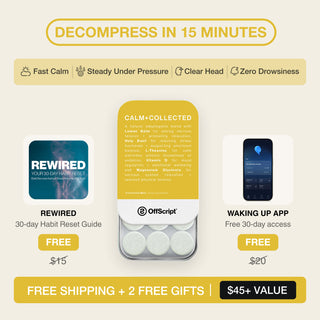
We use L-theanine at 200mg as the acute layer, + holy basil rather than ashwagandha as the adaptogen. That is a deliberate choice: holy basil has randomised placebo-controlled evidence on stress outcomes (Lopresti et al., 2022) with a lighter caution profile than ashwagandha carries. Magnesium glycinate sits underneath as a cofactor, where the key review called the anxiety evidence suggestive but limited by study quality (Boyle et al., 2017).
Promotes calm, focused attention without drowsiness. Works inside the hour.
A traditional herb long used to promote a settled mood.
The adaptogen layer, studied over weeks rather than afternoons.
A gentle, well-absorbed form, easier on the stomach than oxide.
Commonly low in people who work indoors.
Key Takeaways
- L-theanine acts acutely, in roughly 30 to 60 minutes, on the situation in front of you.
- Ashwagandha acts cumulatively over weeks on your baseline. A single dose feels like nothing, by design.
- Most disappointment with either comes from picking the one that does not match the problem.
- Theanine pairs exceptionally well with caffeine. Ashwagandha is unrelated to that.
- Ashwagandha needs real screening: rare liver injury reports, thyroid effects, + cautions in pregnancy.
- They can be combined, but start one at a time or you will not know what did what.
Explore The Series
- L-Theanine Benefits: The Complete Guide
- Ashwagandha For Stress + Anxiety: The Research
- Holy Basil For Stress
- The Best Adaptogens For Stress + Focus
- Cortisol Supplements: What Actually Works
- The Best Supplements For Anxiety
References
- Evans M, et al. A Randomized, Triple-Blind, Placebo-Controlled, Crossover Study to Investigate the Efficacy of a Single Dose of AlphaWave L-Theanine on Stress in a Healthy Adult Population. Neurol Ther. 2021. PubMed
- Chandrasekhar K, Kapoor J, Anishetty S. A prospective, randomized double-blind, placebo-controlled study of safety and efficacy of a high-concentration full-spectrum extract of ashwagandha root. Indian J Psychol Med. 2012. PubMed
- Jamshidi N, Cohen MM. The Clinical Efficacy and Safety of Tulsi in Humans. Evid Based Complement Alternat Med. 2017. PMC
- Lopresti AL, Smith SJ, Metse AP, Drummond PD. A randomized, double-blind, placebo-controlled trial investigating the effects of an Ocimum tenuiflorum (holy basil) extract on stress. Front Nutr. 2022. PubMed
- Boyle NB, Lawton C, Dye L. The effects of magnesium supplementation on subjective anxiety and stress: a systematic review. Nutrients. 2017. PubMed
- Owen GN, et al. The combined effects of L-theanine and caffeine on cognitive performance and mood. Nutritional Neuroscience. 2008. PubMed
FAQ
Is L-theanine or ashwagandha better for anxiety?
They address different things. L-theanine works acutely, within roughly 30 to 60 minutes, and suits situational stress such as a presentation or a flight. Ashwagandha works cumulatively over weeks and suits a sustained period of pressure where your baseline has risen. Picking the one that does not match your pattern is the most common reason people conclude neither works.
Can you take L-theanine and ashwagandha together?
Yes, and they are not redundant because they operate on different timescales. Many stress formulas combine an acute ingredient with an adaptogen for that reason. The practical advice is to start them one at a time, otherwise you will not know which one is responsible for any change you notice.
How long does ashwagandha take to work?
Weeks rather than hours. The trials people cite typically run around 60 days, and a single dose produces nothing noticeable. If you are going to try it, commit to six to eight weeks before judging, and check the cautions first.
Is ashwagandha safe?
For many people, but it warrants more screening than it usually gets. There have been rare but documented reports of liver injury associated with ashwagandha supplements, it can affect thyroid hormone levels, and it is generally advised against in pregnancy and for people with hormone-sensitive conditions or autoimmune thyroid disease. Speak to a doctor first if any of that applies, and stop and seek advice for yellowing skin or eyes, dark urine or unexplained abdominal pain.
Does L-theanine make you sleepy?
Not typically. It is associated with increased alpha-wave activity, the pattern linked to relaxed alertness rather than sedation, which is why it works alongside caffeine rather than against it. People generally describe less edge without less sharpness.
These statements have not been evaluated by the Food and Drug Administration. This product is not intended to diagnose, treat, cure, or prevent any disease. This article is educational and is not medical advice.