




Brain fog is the most searched cognitive complaint that is not actually a medical diagnosis. It is a bundle of symptoms: slow recall, wooly thinking, rereading the same paragraph three times, reaching for a word that will not come. Because it is a bundle, there is no single fix, + anyone selling you one is selling you marketing. This piece takes the honest route: what usually causes the haze, which supplements have real evidence, + which part of the problem no supplement can touch.
What actually helps: the supplements for brain fog with real support are vitamin B12 + vitamin D where a deficiency is driving it, citicoline for the attention machinery, caffeine paired with L-Theanine for the alertness layer, + rhodiola rosea when stress fatigue is the cause. Matching the tool to the cause is the whole game, + the rest of this guide is that matching.
What Brain Fog Actually Is
Clinicians do not chart brain fog. What they chart are the things underneath it: fragmented sleep, chronic stress load, dehydration, low physical activity, a diet running on refined carbohydrate spikes, or an underlying condition that deserves proper attention. Brain fog is the dashboard warning light, not the engine problem.
That reframe matters because it sets the order of operations. If the light is on because you slept five hours, a supplement is not the intervention. If the basics are genuinely handled + your thinking is still muddy in the early afternoon, that is where the evidence-backed ingredients below earn a place.
The Usual Suspects Behind the Haze
Sleep debt compounds. The landmark dose-response work on sleep restriction found that two weeks of six-hour nights produced cognitive deficits equivalent to two full nights of total sleep deprivation, while the participants themselves rated their impairment as mild (Van Dongen et al., 2003). That gap between how impaired you are + how impaired you feel is a fair description of chronic fog.
Stress load taxes the same circuits you think with. Sustained pressure depletes the catecholamine signaling that working memory runs on, which is why fog so often shows up in the busiest stretch of the year rather than the calmest.
The afternoon crash is chemistry, not character. A caffeine-spike morning followed by an adenosine rebound + a lunch glucose dip lands predictably around 2pm. We wrote a full piece on that cycle in Clean Energy Without the Crash.
Sometimes it is medical. Persistent fog can accompany low B12 status, thyroid issues, sleep disorders + other conditions. Fog that does not move when sleep, stress + diet do is a conversation for your doctor, not a supplement decision.
Supplements With Real Evidence
B vitamins are the infrastructure. B6 + B12 sit inside the enzymatic machinery that converts food into brain-ready fuel + builds the neurotransmitters thinking runs on; a comprehensive review makes the case that the brain's B-vitamin demands are far higher than the amounts that merely prevent deficiency (Kennedy, 2016). They are not a stimulant + you will not feel them in an hour. They are the reason the rest can work.
Rhodiola Rosea targets the fatigue flavor of fog. In a repeated low-dose trial with physicians on night duty, one of the foggiest populations imaginable, Rhodiola was associated with improvement on a fatigue index + perceptive + cognitive measures (Darbinyan et al., 2000). Adaptogen is an overused word; the night-shift data is why this one keeps its seat.
Caffeine + L-Theanine handle the acute clearing. The pairing improved attention + reduced task-related tiredness compared with caffeine alone in controlled trials (Haskell et al., 2008). This is the closest thing on this list to a fast-acting defogger, with the caveat that it is borrowing alertness, not repaying sleep debt.
Choline feeds the signaling. Citicoline supplies choline, a precursor for acetylcholine, the neurotransmitter most associated with attention + memory encoding. We compared the choline sources honestly in Citicoline vs Alpha-GPC.
What No Supplement Will Fix
Here is the section most supplement brands skip. No ingredient on this page repays chronic sleep debt, hydrates you, replaces daylight, or treats a medical condition. A great stack on five hours of sleep is a fast car with no fuel: the engineering is fine, the inputs are missing.
The honest hierarchy is boring + effective: consistent sleep, morning light, water, movement, then supplementation for the edge on top. If fog persists after the basics are genuinely in place for a few weeks, or arrives with other symptoms, take it to a clinician. That is not legal boilerplate; it is the correct order of operations.
Where FOCUS+FLOW Fits
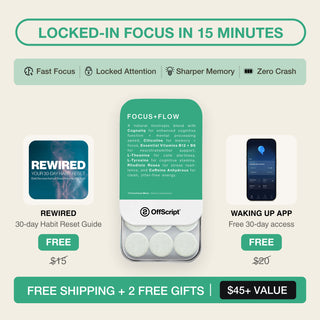
We built FOCUS+FLOW for the sharpening layer of this hierarchy, not the rescue layer. One mint carries CognatiQ 100mg, L-Theanine 150mg, caffeine 100mg, L-Tyrosine 100mg, Rhodiola Rosea 100mg, citicoline 18mg, B12 60mcg + B6 5.1mg, every dose printed on the tin. The sublingual format dissolves under the tongue, so the acute pairing gets to work in minutes rather than after a digestive detour.
It is the tool for the afternoon the haze rolls in before a block of work that matters. It is not the tool for a sleep problem, + we would rather tell you that here than have you find out after a subscription.
Key Takeaways
- Brain fog is a symptom bundle, not a diagnosis. It usually points at sleep debt, stress load, dehydration or an unexamined medical cause.
- Two weeks of six-hour nights impaired cognition as much as two nights of total deprivation, while feeling only mildly impaired. Fog hides its own size.
- The evidence-backed sharpening layer: B vitamins as infrastructure, Rhodiola for fatigue, caffeine + L-Theanine for acute clarity, choline for attention signaling.
- No supplement repays sleep debt or treats a condition. Basics first, sharpening second, doctor if it persists.
Explore The Series
- Clean Energy Without the Crash
- Citicoline vs Alpha-GPC
- Supplements for Burnout
- The Science of L-Theanine
References
- Van Dongen HP, Maislin G, Mullington JM, Dinges DF. The cumulative cost of additional wakefulness: dose-response effects on neurobehavioral functions and sleep physiology from chronic sleep restriction and total sleep deprivation. Sleep. 2003;26(2):117-126. PubMed
- Kennedy DO. B Vitamins and the Brain: Mechanisms, Dose and Efficacy. Nutrients. 2016;8(2):68. PubMed
- Darbinyan V, Kteyan A, Panossian A, et al. Rhodiola rosea in stress induced fatigue. Phytomedicine. 2000;7(5):365-371. PubMed
- Haskell CF, Kennedy DO, Milne AL, Wesnes KA, Scholey AB. The effects of L-theanine, caffeine and their combination on cognition and mood. Biol Psychol. 2008;77(2):113-122. PubMed
FAQ
Is brain fog a medical condition?
No. It is a common way of describing a cluster of symptoms: slow recall, muddy thinking, poor concentration. It usually traces back to sleep, stress, hydration or diet, but persistent fog can accompany genuine medical conditions, so fog that does not respond to lifestyle changes belongs in a doctor's office, not a supplement cart.
What is the best supplement for brain fog?
There is no single answer because fog has no single cause. The strongest evidence clusters around B vitamins as metabolic infrastructure, Rhodiola Rosea for the fatigue component, + caffeine paired with L-Theanine for acute clarity. Anything promising to cure brain fog outright is overclaiming.
How fast do supplements for brain fog work?
Two different clocks. Caffeine + L-Theanine act within the hour, faster in a sublingual format that skips digestion. B vitamins + adaptogens like Rhodiola work on the scale of weeks of consistent use. Expecting the second group to behave like the first is the most common reason people give up on them.
When should I see a doctor about brain fog?
If the fog persists after a few weeks of genuinely consistent sleep, hydration + daily movement, or if it arrives alongside other symptoms like unexplained fatigue, mood changes or memory problems that worry you. Supplements are for sharpening a healthy baseline, not for diagnosing what is off about it.
These statements have not been evaluated by the Food and Drug Administration. This product is not intended to diagnose, treat, cure, or prevent any disease.
