




"Mood swings" covers an enormous range. It might mean snapping at people during a brutal work stretch. It might mean a predictable dip in the week before a period. It might mean something with a clinical name that needs a diagnosis + a treatment plan. Those are genuinely different problems, + the supplement aisle treats them as one. This is an honest sort: what the evidence supports for the everyday version, what it does not, + where the line sits between a nutrition question + a medical one.
We will be direct about our own limits too. We make a calm supplement. It is not a mood stabiliser + we are not going to use that phrase, because it means something specific in medicine.
First, Sort What You Are Dealing With
The right answer depends almost entirely on which of these you recognise.
Load-driven. Short fuse, low tolerance, quick to tears or irritation, tracking a demanding period. Sleep is usually bad too. This one responds to the ordinary levers, + it is the version this article is mostly about.
Cycle-driven. A reliable pattern tied to a menstrual cycle, worst in the luteal phase, lifting when the period starts. Predictability is the tell. Severe versions have a name, PMDD, + a clinician can treat it properly.
Nutritional. Genuinely low vitamin D, B12, iron or magnesium can affect mood. This is worth a blood test rather than guesswork, because supplementing a deficiency you do not have does nothing.
Clinical. Mood changes lasting days or weeks at a time, or extreme swings in both directions, or changes severe enough to disrupt work + relationships. This is where the word "stabiliser" actually belongs, + it is a doctor's territory.
What The Evidence Actually Supports
Modest, mostly indirect, + strongest where a deficiency exists.
Magnesium. A cofactor in hundreds of enzymatic reactions including nerve conduction, + a nutrient many adults take in below the recommended amount. The key systematic review on subjective anxiety + stress called the evidence suggestive of benefit but limited by poor study quality (Boyle et al., 2017). That is a fair summary: plausible mechanism, real but unsettled evidence. Glycinate is the gentlest form for daily use.
Vitamin D. Low status is common in people who work indoors + through winter at higher latitudes, + it is associated with low mood. The honest caveat is that association is not causation, + correcting a genuine deficiency is a very different proposition from adding more when you are already replete. Worth testing rather than assuming.
L-Theanine. Best evidence for the acute end: a randomised, triple-blind, placebo-controlled crossover trial found a single dose reduced the response to an acute stressor in healthy adults (Evans et al., 2021). That is about reactivity in the moment rather than mood across weeks, which is exactly the right claim to make for it.
Adaptogens. Holy basil has randomised placebo-controlled evidence on stress outcomes (Lopresti et al., 2022), measured over weeks. Useful if a sustained stress load is what is shortening your fuse. Not useful as an acute rescue.
Saffron. Some of the more interesting mood data among botanicals, with placebo-controlled trials on mood measures in healthy adults. It is not in our formula, + we cover it separately in saffron for mood + anxiety.
What Does Not Hold Up
Anything branded a "natural mood stabiliser." Mood stabiliser is a pharmacological class: lithium, certain anticonvulsants, used for bipolar disorder under supervision. No supplement has evidence in that role, + the phrase is borrowed to imply one. If you have been prescribed a mood stabiliser, do not substitute anything for it without your prescriber.
5-HTP + St John's Wort as casual additions. Both have real pharmacological activity, which is precisely the problem. St John's Wort interacts with a long list of medications including hormonal contraceptives + antidepressants. 5-HTP carries serotonin-related risks when combined with antidepressants. These are not gentle-because-herbal.
Anything promising emotional regulation in days. The nutritional interventions work over weeks, if a deficiency exists. The acute ones reduce reactivity in the moment. Neither is a personality change.
The Unglamorous Things That Beat All Of It
Sleep. Comfortably the largest effect available. Short sleep degrades emotional regulation directly, which is why one bad night makes ordinary irritations feel like provocations. If you fix one thing, fix this.
Eat at regular intervals. Blood-sugar swings map onto mood swings more tightly than most people notice, + skipped meals are their own stressor.
Morning light + movement. Anchors the daily rhythm, which governs both energy + mood stability across the day.
Alcohol, honestly assessed. Reliably worsens both sleep quality + next-day mood, and it is the input people are least willing to examine.
Caffeine timing. The afternoon cup lands on an already-loaded stress response. Controlled work found habitual drinkers keep a partial cortisol response to later doses even after tolerance develops to the morning one (Lovallo et al., 2005).
Where CALM+COLLECTED Fits
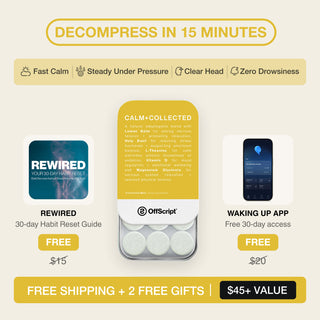
Narrowly + honestly: it supports the stress response during high-pressure stretches, which is the load-driven version of this problem. It is not a treatment for a mood disorder + not a substitute for anything prescribed.
The acute one. Promotes calm, focused attention without drowsiness.
A traditional herb long used to promote a settled mood.
The adaptogen layer, for a sustained stress load.
A gentle, well-absorbed form, easier on the stomach than oxide.
Commonly low in people who work indoors.
Two of those, magnesium + vitamin D, are the nutritional ones above. Note that 20mcg is a maintenance amount, not a correction dose. If you suspect a real deficiency, test + treat it properly rather than relying on a mint.
When To See Someone
CALM UNDER PRESSURE
For the load-driven version. Caffeine-free, every dose printed, no claims we cannot back.
SHOP CALM+COLLECTEDKey Takeaways
- Sort the cause first: load-driven, cycle-driven, nutritional or clinical. They need different answers.
- Within-a-day shifts tracking workload + sleep are the version supplements + habits can help. Shifts across days or weeks need assessment.
- Magnesium + vitamin D have the most plausible nutritional case, strongest when an actual deficiency exists. Test rather than guess.
- "Natural mood stabiliser" borrows a pharmacological term no supplement has earned. Never substitute for a prescribed one.
- Sleep beats every supplement here, + regular meals, morning light + honest alcohol assessment are close behind.
Explore The Series
- Mood Boosting Supplements: The Honest Shortlist
- The Best Magnesium for Anxiety: Which Form Actually Works
- Saffron for Mood + Anxiety
- The Complete Guide to Natural Calm + Stress Relief
- Cortisol + Sleep: The Curve That Decides Your Night
References
- Boyle NB, Lawton C, Dye L. The effects of magnesium supplementation on subjective anxiety and stress: a systematic review. Nutrients. 2017;9(5):429. PubMed
- Evans M, et al. A Randomized, Triple-Blind, Placebo-Controlled, Crossover Study to Investigate the Efficacy of a Single Dose of AlphaWave L-Theanine on Stress in a Healthy Adult Population. Neurol Ther. 2021;10(2):1061-1078. PubMed
- Lopresti AL, Smith SJ, Metse AP, Drummond PD. A randomized, double-blind, placebo-controlled trial investigating the effects of an Ocimum tenuiflorum (holy basil) extract on stress. Front Nutr. 2022;9:965130. PubMed
- Lovallo WR, et al. Caffeine stimulation of cortisol secretion across the waking hours in relation to caffeine intake levels. Psychosomatic Medicine. 2005. PMC
FAQ
What supplements help with mood swings?
The most defensible are magnesium and vitamin D, and mainly when an actual deficiency exists, which is worth testing rather than assuming. L-Theanine has good evidence for reducing reactivity in the moment rather than changing mood across weeks. Adaptogens like holy basil work on a sustained stress load over weeks. All of these are modest, and sleep does more than any of them.
Are there natural mood stabilizers?
Not in the medical sense of that term. Mood stabiliser refers to a specific drug class, including lithium and certain anticonvulsants, used for bipolar disorder under supervision. No supplement has evidence in that role, and the phrase gets borrowed in marketing to imply one. If you take a prescribed mood stabiliser, never substitute a supplement for it without speaking to your prescriber.
Can magnesium help with mood swings?
Plausibly, with honest limits. Magnesium is a cofactor in nerve conduction and many adults consume less than the recommended amount. The main systematic review on subjective anxiety and stress called the evidence suggestive but limited by poor study quality. Glycinate is the gentlest form for daily use. It is a reasonable foundational input rather than a fix.
Why do I have mood swings before my period?
Hormonal shifts across the luteal phase affect mood for many people, and the predictability of the pattern is the distinguishing feature. When it is severe enough to disrupt work or relationships it may be PMDD, which is a recognised condition with real treatments. That is worth raising with a clinician rather than managing alone with supplements.
When are mood swings a medical problem?
When they last days or weeks at a time rather than hours, swing to unusual highs as well as lows, or interfere with your work and relationships. Thyroid disorders, anaemia, perimenopause and medication side effects all cause mood instability and are all diagnosable. If you are having thoughts of harming yourself, contact a doctor or a crisis line today.
These statements have not been evaluated by the Food and Drug Administration. This product is not intended to diagnose, treat, cure, or prevent any disease. It is not a mood stabiliser and is not a substitute for prescribed medication. This article is educational and is not medical advice.