




Ask around any GLP-1 community + the sleep thread is always there: falling asleep fine but waking at 3AM, vivid dreams, restless nights on injection day, or simply feeling wired despite being exhausted. It gets far less attention than nausea, + it wears people down more.
First things first: this is not an article telling you to stop your medication. GLP-1 medications are prescription drugs doing a real job. This is about understanding why nights can get rough alongside them + what safely helps, with your prescriber kept in the loop.
Why GLP-1s Can Disturb Sleep
There is not yet a deep research literature on GLP-1 medications + sleep specifically, so honesty requires saying these are plausible mechanisms consistent with how the drugs work, not settled findings.
You are eating much less, sometimes very late-shifted. Appetite suppression means many users under-eat through the day. A long overnight gap on a small dinner invites the blood sugar dip that triggers a cortisol + adrenaline response in the small hours, the classic 3AM wake. This is likely the single biggest contributor.
Gastrointestinal effects at night. Slowed stomach emptying means a late meal can sit uncomfortably at bedtime, + reflux or nausea will fragment a night reliably.
Rapid weight change is a stressor. Large calorie deficits raise stress hormone activity in their own right. Some of the wired-but-tired feeling is the deficit, not the drug.
Injection-day effects. Many users report the roughest sleep in the day or two after dosing, when side effects peak.
What Helps, In Order Of Leverage
1. Eat deliberately, because appetite will not remind you
The most useful change is scheduling food. Protein-forward, spread across the day, with dinner neither skipped nor heavy, + not right before bed given slowed stomach emptying. On a GLP-1 you cannot rely on hunger cues to time eating, so a schedule replaces them. This addresses the overnight blood sugar dip directly + protects muscle while you are at it.
2. Anchor the rhythm harder than usual
Consistent wake time, outdoor light within an hour of waking, caffeine early only. Your sleep system is absorbing a big metabolic change; give it the strongest timing signals available. The mechanics live in cortisol + sleep.
3. Time the evening around your stomach
Smaller, earlier dinner. If reflux features, avoid lying flat soon after eating. Some users find shifting injection day so the rough nights land on low-stakes days helps, which is a conversation for the prescriber.
4. Support the stress side, carefully
If the pattern is wired-at-night + 3AM waking, the stress-support toolkit applies. The relevant evidence: a single dose of L-theanine reduced the response to a stressor in a triple-blind placebo-controlled crossover trial (Evans et al., 2021); holy basil has randomised placebo-controlled evidence on stress outcomes over weeks (Lopresti et al., 2022); magnesium is the cofactor underneath, with evidence a systematic review called suggestive but limited (Boyle et al., 2017). Melatonin is generally the wrong tool here, because the complaint is staying asleep, not falling asleep.
Run any supplement past your prescriber first. That is not boilerplate: GLP-1 users are often on several medications, + slowed gastric emptying can change how things absorb.
Where We Fit, Stated Plainly
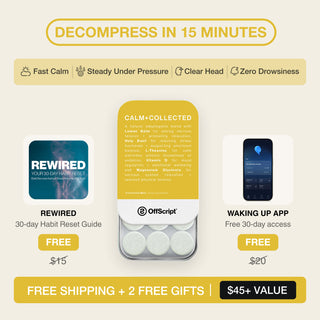
CALM+COLLECTED is a caffeine-free, melatonin-free, sugar-free dissolving mint built for exactly the wired-evening, stress-shaped sleep problem: theanine for tonight, holy basil for the baseline, lemon balm alongside, magnesium glycinate underneath. It is not a GLP-1 product, it does not treat side effects of any medication, + it is not a reason to skip the prescriber conversation above.
Promotes calm, focused attention without drowsiness. Works inside the hour.
A traditional herb long used to promote a settled mood.
The adaptogen layer, studied over weeks rather than afternoons.
A gentle, well-absorbed form, easier on the stomach than oxide.
Commonly low in people who work indoors.
CALM UNDER PRESSURE
Caffeine-free, melatonin-free, sugar-free. Every dose printed.
SHOP CALM+COLLECTEDKey Takeaways
- Sleep disruption on GLP-1s is common + under-discussed. The mechanisms are plausible rather than settled science, + honesty requires saying so.
- Under-eating is likely the biggest driver: small dinners invite the overnight blood sugar dip behind 3AM waking.
- Scheduled, protein-forward eating replaces the hunger cues the medication removed.
- Rhythm anchors matter more than usual: consistent wake time, morning light, early caffeine only.
- Melatonin is generally the wrong tool: this is a staying-asleep problem.
- Report sleep problems to your prescriber. Dose, titration + timing are adjustable, + never change them yourself.
Explore The Series
- Why Do I Wake Up At 3AM? The Cortisol Answer
- Cortisol + Sleep: The Curve That Decides Your Night
- Melatonin Alternatives That Actually Work
- Racing Thoughts At Night
- What To Take Alongside A GLP-1: The Companion Guide
- Life After Ozempic: Keeping The Results
References
- Evans M, et al. A Randomized, Triple-Blind, Placebo-Controlled, Crossover Study to Investigate the Efficacy of a Single Dose of AlphaWave L-Theanine on Stress in a Healthy Adult Population. Neurol Ther. 2021. PubMed
- Lopresti AL, et al. A randomized, double-blind, placebo-controlled trial investigating the effects of an Ocimum tenuiflorum (holy basil) extract on stress. Front Nutr. 2022. PubMed
- Boyle NB, Lawton C, Dye L. The effects of magnesium supplementation on subjective anxiety and stress: a systematic review. Nutrients. 2017. PubMed
- Lopresti AL. Modulation of the hypothalamic-pituitary-adrenal (HPA) axis by plants and phytonutrients: a systematic review of human trials. Nutr Neurosci. 2022. PubMed
FAQ
Can Ozempic or other GLP-1s affect sleep?
Many users report sleep changes: middle-of-the-night waking, vivid dreams, restless injection-day nights, or feeling wired despite exhaustion. There is not yet a deep research literature on the mechanism, but plausible contributors include under-eating producing overnight blood sugar dips, gastrointestinal effects at night, and the stress load of a rapid calorie deficit. Report it to your prescriber, because dose and timing are adjustable.
Why do I wake up at 3AM on a GLP-1?
The likeliest chain: appetite suppression leads to a small or skipped dinner, blood glucose dips overnight, and the body responds with cortisol and adrenaline to mobilise energy, which wakes you alert in the small hours. Scheduled, protein-forward eating through the day, with a real but not heavy dinner, addresses the trigger directly.
What can I take for sleep while on Ozempic?
Ask your prescriber before adding anything, since GLP-1 users are often on several medications and slowed stomach emptying can change absorption. The non-drug levers come first: scheduled eating, consistent wake time, morning light, early caffeine. Among supplements, the stress-support stack of L-theanine, a calming botanical and magnesium fits the wired-at-night pattern better than melatonin, which targets falling asleep rather than staying asleep.
Do vivid dreams on GLP-1s mean something is wrong?
Vivid dreams are a commonly reported experience and on their own are not a red flag. Persistent nightmares, severe nighttime nausea or vomiting, signs of dehydration, severe abdominal pain, or mood changes are worth prompt medical attention. Anything that consistently ruins your nights belongs in the conversation with your prescriber.
Should I stop my GLP-1 if it ruins my sleep?
Not on your own. Sleep disruption is usually manageable through eating schedule, dose adjustments and titration speed, all of which are prescriber decisions. Stopping abruptly also brings appetite back quickly, which has its own consequences. Bring the sleep problem to the person who prescribed it and solve it inside the treatment rather than by abandoning it.
These statements have not been evaluated by the Food and Drug Administration. This product is not intended to diagnose, treat, cure, or prevent any disease. This article is educational and is not medical advice.