




On paper this is a rout. A pouch is a measured dose of caffeine with no sugar, no acid, no 500ml of cold liquid + no aluminium. An energy drink is most of those things plus a lot of marketing.
In practice it is closer than that, + the reason is behavioural rather than chemical. Here is the honest comparison.
What You Are Actually Getting
Energy drink. Typically 80mg to 200mg of caffeine in a can, frequently with sugar, taurine, B vitamins, + a proprietary blend. The sugar-free versions swap sweeteners. The volume is the hidden variable: half a litre of cold liquid has its own effect on how alert you feel, which is not caffeine doing the work.
Caffeine pouch. Caffeine, usually between 50mg + 100mg, plus sweetener, flavouring, a plant fibre filler + sometimes B vitamins. No sugar, no volume, no acid on your teeth.
On composition alone the pouch is cleaner. That part is not really arguable.
Speed
The pouch wins, + the mechanism is well established. Caffeine absorbed through the lining of the mouth enters circulation without passing through the liver first. Reviews of buccal + sublingual delivery describe this as bypassing hepatic first-pass metabolism.
The closest thing to hard data is caffeinated gum, which uses the same route: peak plasma concentration at roughly 44 to 80 minutes versus 84 to 120 minutes for capsules.
An energy drink is a liquid, so it clears the stomach faster than a capsule, but it still goes through the gut. Call it a middle position.
The Sugar Problem, And The Sugar-Free Problem
A sugared energy drink stacks a glucose spike on top of a stimulant. The rise feels like extra energy + the fall arrives later as the crash people blame on caffeine. Much of the classic energy drink crash is sugar, not the stimulant.
The sugar-free versions remove that, which is a genuine improvement. What they do not remove is the acid load on your enamel, or the habit of drinking a large volume of something intensely flavoured several times a day.
Pouches sidestep both. This is the clearest win in the comparison.
Where Energy Drinks Win
Two things, + the second one matters more than people expect.
Hydration + volume. You are drinking half a litre of fluid. If the alternative is a pouch + nothing, the can is doing something useful that the pouch is not.
A can ends. This is the real advantage. Finishing a drink is a natural checkpoint, + opening another is a conscious decision you have to make. A tin of pouches in your pocket has no such moment. It is silent, discreet, requires no preparation + leaves nothing behind.
Every feature that makes a pouch convenient also removes a cue that tells you how much you have had. At 100mg a pouch, four across a working day is 400mg, the ceiling the FDA generally cites for healthy adults, + that is before a morning coffee.
Cost + Practicality
Pouches are cheaper per dose in almost every market, + they do not need refrigeration, do not leak in a bag + do not need to be finished once opened. For travel, the gym, driving or a long shift, the practical gap is wide.
Energy drinks win when you want a drink, which is a real thing to want + not worth being sniffy about.
The Thing Neither Format Solves
Both are caffeine delivery systems, + caffeine on its own is a blunt instrument. It raises arousal. Arousal is not focus. Anyone who has been wired + useless at the same time knows the difference.
The most replicated finding in this literature is not about caffeine alone. It is about caffeine paired with L-theanine, which improves accuracy on demanding attention-switching tasks + reduces susceptibility to distraction, with EEG work showing alpha-band changes consistent with sustained attention.
Energy drinks rarely carry theanine at a meaningful dose. Pouches mostly cannot, because there is no room: caffeine is potent by weight so 100mg takes almost no space, while a meaningful theanine dose is 100mg to 200mg + considerably bulkier.
Where We Landed
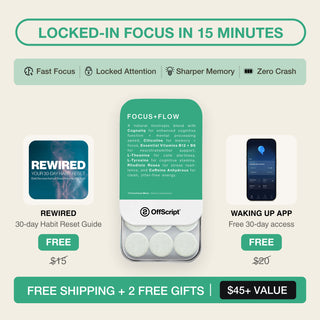
FOCUS+FLOW is a fast-dissolving mint. It uses the same oral-mucosal route a pouch does, dissolves completely rather than leaving part of the dose in material you discard, + has the room to carry a full formula rather than caffeine with a garnish.
Patented coffee-fruit extract, clinically studied to support BDNF.
Calm, focused attention without the jitters.
Dopamine precursor for drive + focus under pressure.
Adaptogen that supports mental stamina under stress.
Clean, measured energy, smoothed by L-Theanine.
Raw material for acetylcholine, the memory + learning neurotransmitter.
Supports neurotransmitter production.
Supports cellular energy.
Key Takeaways
- On composition the pouch wins: no sugar, no acid, no volume, + a dose you can actually read.
- Much of the classic energy drink crash is the sugar, not the caffeine.
- Pouches absorb faster because the oral route bypasses first-pass liver metabolism. Faster is not stronger.
- A can has a built-in ending. A tin does not, + that is the pouch format's real risk.
- Neither format solves the underlying problem: caffeine alone raises arousal, which is not the same as focus.
- Count milligrams across everything, not units of any one thing.
Explore The Series
- Caffeine Pouches: Do They Actually Work?
- Caffeinated Mints vs Energy Drinks
- Energy Pouches: What They Are + What To Look For
- Caffeine Pouches vs Coffee: An Honest Comparison
- Clean Energy Without The Crash
- The Best Energy Mints
References
- Kamimori GH, et al. The rate of absorption and relative bioavailability of caffeine administered in chewing gum versus capsules to normal healthy volunteers. International Journal of Pharmaceutics. 2002. PubMed
- Wickham KA, Spriet LL. Administration of Caffeine in Alternate Forms. Sports Medicine. 2018. PMC
- Sublingual and Buccal Delivery: A Historical and Scientific Prescriptive. Pharmaceutics. 2025. MDPI
- Owen GN, et al. The combined effects of L-theanine and caffeine on cognitive performance and mood. Nutritional Neuroscience. 2008. PubMed
- Kelly SP, et al. L-theanine and caffeine in combination affect human cognition as evidenced by oscillatory alpha-band activity and attention task performance. Journal of Nutrition. 2008. PubMed
FAQ
Are caffeine pouches healthier than energy drinks?
On composition, generally yes. A pouch carries no sugar, no acid load on enamel and no 500ml of liquid, and the caffeine dose is printed rather than variable. Sugar-free energy drinks close part of that gap but keep the acidity and volume. The pouch's disadvantage is behavioural rather than chemical: it is far easier to lose count.
Do caffeine pouches cause a crash like energy drinks?
Less so, because much of the classic energy drink crash is the sugar rather than the caffeine. A glucose spike rises and falls on its own schedule and the fall gets blamed on the stimulant. A sugar-free pouch removes that. You can still experience the ordinary comedown as caffeine clears, particularly at higher doses.
How much caffeine is in an energy drink versus a pouch?
Energy drinks typically run 80mg to 200mg per can. Pouches typically run 50mg to 100mg each. The pouch figure is printed and consistent, whereas can sizes and formulations vary widely, so the pouch is the easier of the two to dose deliberately.
Are caffeine pouches cheaper than energy drinks?
In most markets, yes, per dose. They also need no refrigeration, do not leak, and do not have to be finished once opened, which makes them considerably more practical for travel, training and long shifts.
Do energy drinks or pouches help you focus better?
Neither solves it well on its own, because caffeine raises arousal rather than focus. The most replicated finding in this area is that caffeine paired with L-theanine improves accuracy on demanding attention tasks and reduces distractibility. Energy drinks rarely carry theanine at a meaningful dose, and pouches usually cannot fit one.
These statements have not been evaluated by the Food and Drug Administration. This product is not intended to diagnose, treat, cure, or prevent any disease. This article is educational and is not medical advice.